Sunday, June 13, 2010

Queretaro Entry 2


OLÉ, Organización Linguistica de Español, has been selected by some Seminaries in the US to send their seminarians for Spanish language training. I think one of the reasons for their selection is that OLÉ is located in Querétao, a very Catholic city. How is it so? I’ll tell you in another entry. This program arranges for students to stay with families of the local people. They would take care of food and lodging for the students while they attend class every morning. Mount Saint Mary Seminary incorporates with OLÉ to include the spiritual component, so that our daily schedule includes Mass and holy hour.


I usually wake up around 6:30 and have breakfast with my family before leaving for class at 8:00 am. The walk to school is about 20 minutes. We seminarians would have Morning Prayer together before class starts at 9:00. From the placement test, I am placed in 2nd to the lowest level. Each session is 55 minutes. For the first two sessions I have Grammar, and after the 30 minute break, we have Conversation session. There is one instructor in the Grammar, but two instructors in the Conversation class. I guess that would make the conversation practice go more smoothly.


Our school is very beautiful. Too beautiful that it looks more like a vacation home. The staff and instructors are extremely friendly and helpful. They make a commitment to talk to us in English only on the first day, after that, only in Spanish, although everybody in the faculty and staff has a working knowledge of English. The classrooms are small because the class size is small. There are only 3 students in the class of my level. Some other levels have 4 or 5, or 6 students at most. There seem to be a lot of students from the United States studying in this school. There are some young kids attending classes here too. I’m surprised that their parents allow them to be away in a foreign country for an extended time like this.


OLÉ has been around for 15 years so they know how to accommodate foreign students. For example, they know that Americans are not usually used to Mexican food on the first days, and diarrhea is a common problem for them on the first few days, so they have ready in their medicine cabinet some drugs for stomach problems. Within this week alone, there are 3-4 people who have to take advantage of that accommodation already. I do feel a little funny in my stomach sometimes, too. I still like the food though.


There is a small library with some old books that no one seems to check out. There is a computer room with three computers on which the Internet usually works. There is wireless in the patio, but during busy hours it runs really slow, or stops running altogether. I just discovered today that in El Centro (downtown), there is free wireleless Internet that is a lot stronger and faster. I just happen to see a lot of people using their laptops one day, and they told me that the Internet was free there.


As I’m writing this Entry, the schedule has been adjusted to better fit our schedule. For the first few days, we had to figure out when to do what and where. We often had to come back to school or some church near by later in the day for our daily Mass. But from now on, we’ll have Holy Hour and Mass right after the last class of the day. By the time we finish everything it is close to 2:30 pm. We’d then have the rest of the day free to do homework or whatever else we want to. And Yes, there is a lot of homework.

Tuesday, June 8, 2010

Queretaro Entry 1

Queretaro is a beautiful city. I haven’t had a chance to read about the history of this city, but from the little of what I know this city has a lot of history and architectural significance. I arrived at my home around 11 pm after a long day traveling. The flights themselves, from Atlanta to Houston and from Houston to Querétaro were only 4 hours in total but the waits took the whole day.


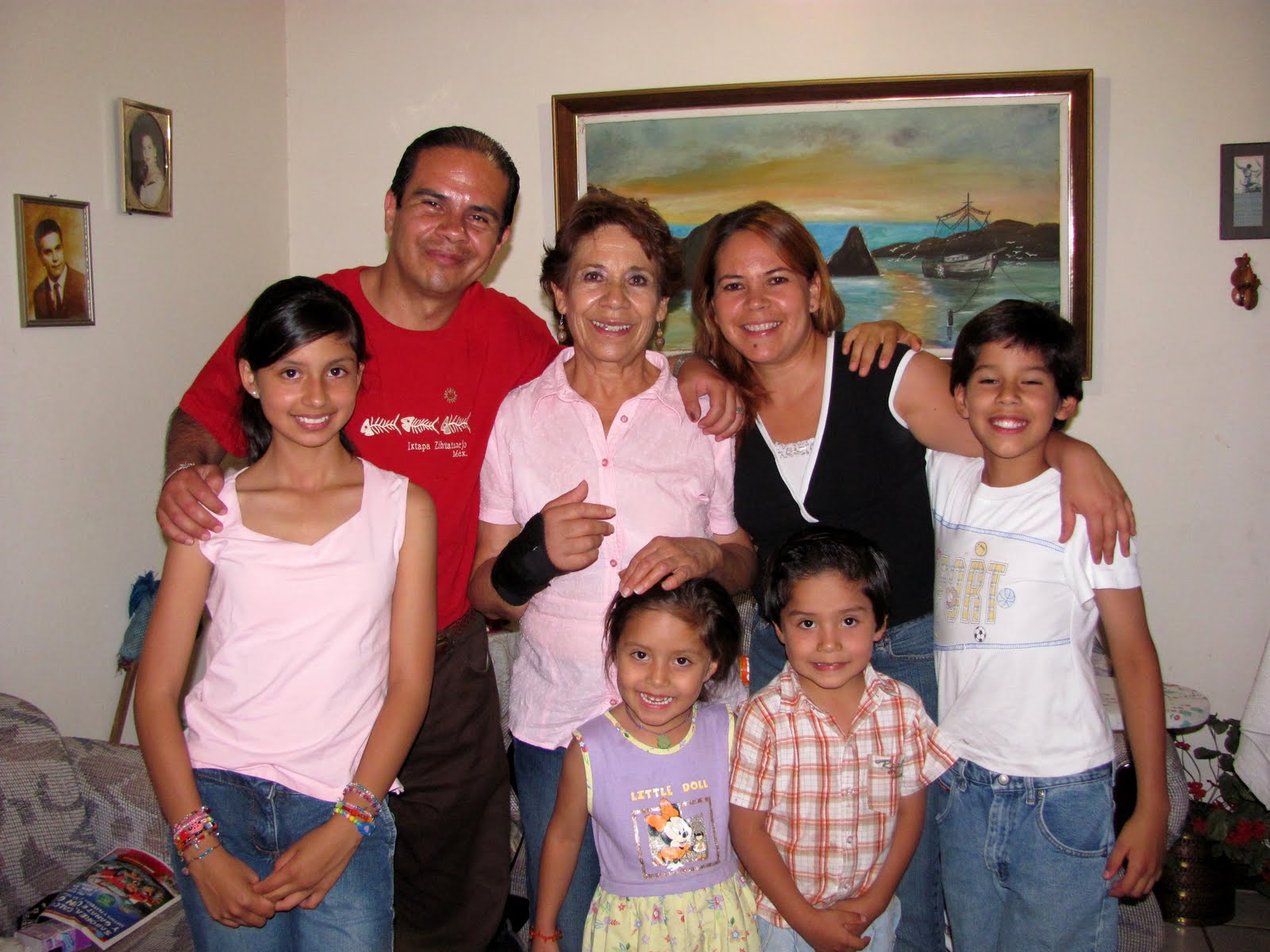
My host family is very friendly and very kind. The mother is a widow who has two grown children living with her. One of whom is married with 4 little kids, while the other goes back and forth between her home and his apartment in a city two hours away. The whole family welcomed and greeted me in the living room when I arrived. The little kids behaved so well and very friendly. The oldest girl is, I think, twelve years-old, next, a 10 year-old boy and the twin: one boy and one girl of 5 years-old. They were not shy to stranger at all. Their mother, the home owner’s daughter is a kindergarten teacher who knows some English. She is the one who helps me out whenever I am stuck with my Spanish.


I took some pictures with them and stayed up to watch some TV with the whole family. We were making our best efforts to communicate and to understand each other. For some reason, I did not feel frustrated or discouraged not being able to express what I wanted to or fully understand what they said. I felt very at home with them. They had prepared a room with two beds. From what I gathered from Maria’s explanation, she was expecting two students staying at her home but in the end there was only me.

The first day of school, I woke up around seven. Everyone was in a hurry finishing up their breakfast before school. I had some bread, milk coffee and a bowl of tropical fruits: water melon and papaya. As a tradition of Olé, the Spanish program I am attending, the host family would take their student to school on the first day to make sure they get there. My home is a little more than a mile from the school which took us 20 minutes to walk there.


My first thought while walking to school was how much Querétaro reminded me of Saigon: the streets are narrow and the houses are one next to the other; and almost every house has some business, while everyone in the family stays on the 2nd floor. You would see on these small streets convenient stores, food or drink shops, clothing stores, flower shops, shoe stores, private doctor offices, gift shops, small café, etc. The roads are all bricks, and the houses were built in, I think, the Spanish colonial architecture. Most of the streets are one-way because they are narrow; however, the cars move very fast along those small streets. There are many people walking on the side-walks on both sides. There is a school for rich kids which is called “particular escuela,” and a public school just across from that school. That is why the streets I walked were busy in the morning with students and their parents.


The mother of my home walked me to school. She is a strong woman, and I can tell that the living conditions in this town keep her and most other people very healthy. Why? Because they walk to places every day. What else? Because they know how to eat together with family and take time out to relax: after sun down, the benches along the city sidewalks and little parks and squares in the city are filled with people. They are just chilling with their family and friends, on a week day. More on the lifestyle will be talked about in another journal entry.


It is rather hot during the day and there is no air condition in this city. Heat is always my concern when I come to a place, but for some reason it has not bothered me that much here in Querétaro. It is cool at night: I’d say it’s around the low 70’s. If you walk to fast to school in the morning, you might be sweating by the time you arrive. That is why I take my time to walk to school.

Monday, April 26, 2010

Archbishop Gregory: ‘This should be a time for healing’  | ajc.com

Archbishop Gregory: ‘This should be a time for healing’ | ajc.com

Posted using ShareThis


The Atlanta Journal-Constitution

The Catholic church in North Georgia continues to grow, even as it deals with huge challenges — welcoming transplants and immigrants; planning new churches and schools; and reassuring parishioners about reports involving sexual abuse by priests.

Archbishop Wilton Gregory of the Atlanta archdiocese says the Catholic church is in need of "good, healthy, energetic, joyful Catholic priests." The prostate cancer survivor also says he is doing great since his surgery in 2007.
John Spink, jspink@ajc.comArchbishop Wilton Gregory of the Atlanta archdiocese says the Catholic church is in need of "good, healthy, energetic, joyful Catholic priests." The prostate cancer survivor also says he is doing great since his surgery in 2007.

The Atlanta archdiocese, according to Archbishop Wilton Gregory, now lists 850,000 Catholics in the territory: 95 parishes in 69 counties, served by 275 priests.

Gregory, 62, recently addressed the growing pains, along with the new scandals, facing the Vatican.

Q: What do you make of the criticisms leveled at the church in the past several months for covering up sexual abuse by priests?

A: I wish you were limited to [only] the last several months. It has taken on a new energy. It’s focused on the way that Rome, the Holy See, has handled these cases on the international level. Eight years ago we were more focused on the cases that faced the bishops of the United States. So it’s a reintroduction of an issue that has now taken on an international dimension.

Q: Is it troubling for people in the clergy stateside to see this constant parade of headlines?

A: Well, of course. First of all, I’m going to start with the Catholic people, the people who attend church and send their kids to Catholic school: This is terribly troubling for them. It reopens some very deeply felt feelings and sentiments of embarrassment, anger, frustration. Our Catholic people want the church to take straightforward, corrective action.

Q: And as for the clergy?

A: It’s embarrassing to our Catholic clergy, to the priests and deacons. The overwhelming majority of these men and women have served faithfully with integrity, generosity and dedication. So to have to once again live under the shadow of fear and embarrassment, that’s a heavy burden for them to bear.

Q: Do Catholics in Atlanta ask frequently about this?

A: Well, it’s not just the Catholics. This is an issue that touches people of goodwill and people of faith and people of no professed faith. And they do ask me, what is the church doing? What more should we be doing? And basically when will it end? When is this going to end?

Q: When do you think it will end?

A: It will end, I believe, when people are convinced that everything that should be done has been done. I think we’re moving in that direction. The people across the country are increasingly convinced that what we did [in 2002] has made the Catholic community perhaps the safest environment for young people of any public institution in the United States.

Q: You reference actions the church took in 2002. What were they?

A: The bishops of the United States established a series of church-law protocols that required us to remove from public office any cleric who had a credible allegation of sexual abuse of minors against them, no matter how far in the past. We also established that priests and deacons and people who work with children would undergo background checks; that we would be open with our people and parishes when things occurred, and that we would undergo annual reviews by an outside investigative and compliance agency.

Q: Was there much of a history of abuse in Atlanta?

A: In the archdiocese, there were a number of priests who had abused young people in the past. I think they were addressed at the time that they were known. Archbishop [Thomas] Donnellan was the archbishop of Atlanta between 1968 and 1988. From all that I can discover in our history, he dealt very directly, swiftly and effectively with cases that were brought to his attention.

Q: It’s rare in my experience to see such criticism directed personally toward the pope. Do you find that shocking?

A: In the history of the church, popes have often been held up for public criticism. They have been criticized by people who disagreed with the teachings of the church. We live in a world where public criticism can be aired and be seen all over the world instantly. And there’s no editorial board for the Internet, no group of people who can say, you know, this hasn’t been properly researched, or this is somewhat skewed. Some of that criticism may be justified. If we’ve done something wrong, we should be held accountable.

Q: You think there’s more examination that needs to be done?

A: I don’t know, because each morning you might [read about] something else. This should be a time for healing and purification for the Catholic church and for other public institutions that have somehow neglected, covered over, excused or denied activities of leaders that have harmed children. The Catholic church should not be looking for excuses to delay or, you know, justify the actions that we should take.

Q: Do you think it is making excuses?

A: No, no, no. That’s not my point. My point is that so often in this same environment you get people saying that the church is no worse than any other institution. Well, the church should be better than most institutions. That’s my point.

Q: Hispanics make up about 51 percent of the Catholics in North Georgia. You wrote recently about immigrants, particularly Latinos, and the need for the church to offer more than just a place to worship.

A: I think the challenge to the church is certainly to be more welcoming to the stranger in our midst. The vast majority of those people who are new to our community are of a Latino background. But there are also people from Haiti, from Asia, from Europe. The challenge is always to welcome those who may be different in terms of language, culture, heritage than the assembly.

Q: In recent years, some bishops have admonished Catholic lawmakers for their stance on abortion, for being pro “abortion rights.” Should the Catholic church get involved in politics of abortion?

A: Abortion is a moral issue. And the bishop of a diocese is the pastor and the moral leader of his people. So wherever that is an issue, he has to speak up. If that situation occurs, where one of the elected officials is a member of the flock, the bishop has to figure out a way of teaching and admonishing that individual. Different bishops approach it differently. And different politicians receive it differently. It certainly has political ramifications, but for the Catholic community it is primarily a moral issue.

Q: What’s your biggest issue that we haven’t touched on?

A: I’m encouraging vocations. We need good, healthy, energetic, joyful Catholic priests. I ordained seven last year. I think I’m going to ordain five this year.

Q: In the fall of 2007, you had surgery for prostate cancer. How are you doing?

A: I’m doing great. I only see the doctor once a year. I have no residual difficulties whatsoever. It has not improved my golf game, but it has not done any historic damage to it either.

Sunday, April 18, 2010

The Son of God Is Here (Melody: Sometimes When It Rains)

The melody of:
Sometimes When It Rains by Secret Garden


The Son of God is here!

The saving love so dear.

When we were bound by fear

In terror we felt death, oh death so near.

Our desp’rate cry

God heard, his Son He sent,

Who loved us to the end,

Embraced the cross.

The Son of God is here!


We praise you, Lord!

We praise your love!

Our words may fail to ring

Our hearts still sing

O saving love

Has set the captives free,

God’s face to see.

The Son of God is here!


In Vietnamese:

Này Con Thiên Chúa đây rồi

Này Tình Yêu đến cứu đời

Tội xưa xiềng xích con người

Trong tăm tối, tử thần mang lầm than khắp nơi

Ngài vì thương xót

Ngôi Hai sinh nơi thế trần

Tội chết xưa mang vào thân

Tình yêu Thập Giá.

Này Con Thiên Chúa đây rồi.


Ngợi khen danh Chúa

Cám ơn tình yêu

Vẫn luôn gần bên đoàn con

Bánh thơm rượu ngon.

Này tình yêu Chúa

Phá tan ách nô lệ xưa.

Nói sao cho vừa.

Này Con Thiên Chúa đây rồi.

Monday, March 29, 2010

Mini-course for Catholic Education (for young adults)


I attended this workshop at the REC 2010, presented by Bill Heubsch.

The faithful do look into the Church for a solid faith education, but it has to be done in a format that is manageable for them to attend. This workshop presents some principles and tips of how to organize a mini-course that can serve this purpose.

The following are my notes taken from the workshop:


Conversation: What will attract adults to on-going education? What principles do we follow?

Audience Answers:

- What is relevant to their lives? Maybe Go is speaking in their daily life

- There has to be a starting and an ending. “Life-long faith formation” program is not too appealing to them.

- Active engagement in teaching and learning

- Reasonable amount of time, set into the schedule that works for the adult realistic life

- Relating something with child-care, a topic of especially interest of (especially single) parents

- Youth commonly-understood English should be used commonly in the course

- Limit pre- and post- assignments to minimal, keep the course self-contained

- Hospitality

Principles for adult formation:

- It should be fun. Elements that make things fun:

o Food & wine

o Laughter (usually in story telling)

o The right setting: enough warm light, nicely decorated

o When time flies! (fun things make time flies)

o Should include games, ice-breakers sometimes, music, take advantage of media (video clips, movie clips, …), fieldtrips, sharing time at the beginning of class (be careful not to term it faith sharing, but rather check in), quiet time or meditative time at the beginning for reflection/pray, we can alternate high and low energy …

- There is a beginning and a clear end:

o There should be a clear beginning

o There is an end in sigh. People do not commit easily to open-ended programs

o When you creating a binder or a program booklet, it gives the attendants the overall picture of the course, and creates a sense of beginning and end.

- The resource we choose: we have to be carefully chosen,

o successful resources, inexpensive materials

o user-friendly: plain language (not too theologically technical), bite size (1500-1800 words), bullet statements

o attractive presentation

o variety of materials: reading, audio, …

o don’t assume the literacy level of the adults: the conversation is very important

o faithful to the teaching of the Church: rooted in the Catechism, the true teachings and all aspects that are taught by the Church, not pick and choose

- The process we follow, must respect adults:

o Participatory

o Not sitting in class, being lectured

o Leading to spirituality

- The leader of the process must be well prepared and fun

o The right leader can make or break adult information

o The sense of “donating” oneself for the ministry rather than skills, being liked,

The goals:

*Adult Catholics of mature faith. Mature faith is:

- to know Christ

- to love the church community

- signs: as supple sense of oneself: self-learning and growing, self-forgiving for mistakes, on a lifelong journey of faith. The ability to forgive others: dying to oneself in Christ, letting go of grudges and hatred. Donating oneself in love to others: your spouse and family, the poor and rejected, even your “enemies.” Generosity. See through the lens of faith: creation, all community ….

- Community life: parish participation, liturgical life of the parish

- An open heart for people who struggle: as Christ had for us all, Pope John XXIII (open for life in the Church): “open wide your arms like Christ”

The Mini-course

What is mini-course?

- short, defined areas of study

- combined with faith sharing:

o purpose: help folks experience

o and encounter with Christ

o in the context of this learning moment

- purpose: to integrate faith into daily life

- usually 6-10 sessions per mini-course

When do we use them?

- parent gatherings while kids are in class

- the morning mass crowd – going a bit deeper

- RCIA

- Youth ministry and Confirmation

- Adult formation offerings

- Parish based retreat follow-ups

How do you construct one?

- Take a limited topic, but not too limited

- Break it into bite sized pieces: 6-10 min

- Break open the text you choose

- Employ “learn and teach”

- Add some kind of prayer

Sample of a session:

- break open the text

o read the text together, short, bite-size chunks

o pause, ask people what the text means to them: what phrase lingers in your ears, what caught your eyes, what touched your heart,

o share your insights

o move from that into deeper study with Learn and teach

- learn and teach

o break the material into small chunks and assign each to a small group

o each small group draws out the major points

· creates a one-page flip chart sheet on them: which will be presented to all

· and prepares one of the points for dialogue, in diads in the larger group

o learn by teaching

- prayer

o pause to ask “how would you talk to God about this point of faith?” For example, about Catholic teaching on our responsibility for the poor

o using writing and notes, talks

Process

- gather

- check in with each other on what’s new

- focus on the topic

o break open the text

o learn and teach

o take it to prayer (the Ignatian prayer from)

The “text”

- it’s important to have something in their hands which will go home

- should feel valuable

- build your mini-coursed

What there are in the market today:

- Catholic Update

- Lectionary-connected resources are many

o Such as Exploring the Sunday Readings

o RENEW

o Scripture form Scratch

o Threshold Bible Study (Liturgical Press)

o Growing Faith

o Organized into Mini-Courses: with excellent Study Guides and Marketing kigs

Some topics of suggestion:

From the website there are outlines of these topics

  1. The nature of God and Faith
  2. Growing our faith
  3. The person of Jesus Christ (I wouldn’t start from here, but from one’s yearning_
  4. The nature of the Church
  5. Liturgy and Sacraments
  6. Catholic Social and Moral Teaching
  7. Living the Commandments
  8. Christian Prayer
  9. A Thorough Survey of Catholic Life and Practice
  10. The Bible – in plain English
  11. Just Living (take Catholic Social Teaching into your daily living) free service
More resources, click here

Saturday, March 27, 2010

YOU ARE MY HIDING PLACE

You are my hiding place
You always fill my heart
With songs of deliverance
Whenever I am afraid
I will trust in You

I will trust in You
Let the weak say
I am strong
In the strength of the Lord


My translation ...

Ngài vẫn là chốn nương thân
Ngài đến hồn bỗng lâng lâng
Nghe bài hát giải thoát vang ngân
Cho dù đường dài và tăm tối
Lòng cậy trông Ngài luôn

Vững tin vào Chúa luôn
Dẫu con hèn yếu
Nhưng tin Ngài
thêm sức cho kiên vững luôn.